

In 2015, a user posting under the name Soren Hayes (Tumblr: fawnsyndrome, shyfawn, sicklefawn, hurtc0re, faggotuglyhfukcingdickballs, umbillicalnoose, necrochotic, necromutilomania, oathful; MCR Forum: Dark Link The Assassin; Instagram: androeciums, sacrificalis, oathful, soratoys) published the first version of a document they referred to as their “Trauma Narrative” on their blog. It claimed to be a first-person account of nearly three years spent as a child sex trafficking victim in a Seattle warehouse operation. It was written with genuine literary skill. It was also, in every material sense, a fabrication.
A full compilation of Soren’s Trauma Narrative is available to download here: https://files.catbox.moe/2x4fo2.zip — the zip file contains two formats of the complete document (Standard and eBook-formatted PDF), including all three versions of the narrative and a master edition combining them into a single running text.
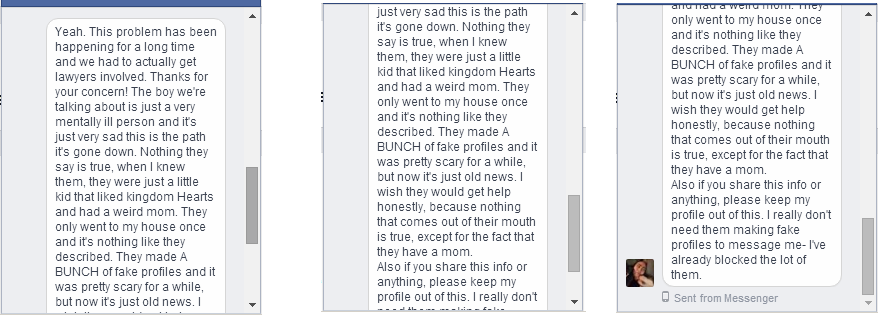
The person at the center of the narrative (a girl Soren called Sam) knew the truth better than anyone. In 2016, when contacted by an anonymous user from Lolcow.farm, asking about the posts and trauma narrative, she replied:
“The boy we’re talking about is just a very mentally ill person and it’s just very sad this is the path it’s gone down. Nothing they say is true. When I knew them, they were just a little kid that liked Kingdom Hearts and had a weird mom. They only went to my house once and it’s nothing like they described. They made A BUNCH of fake profiles, and it was pretty scary for a while, but now it’s just old news. I wish they would get help honestly, because nothing that comes out of their mouth is true, except for the fact that they have a mom.”
— Samantha Stowell, March 2016
The Tumblr Trauma Ecosystem
Tumblr was not a social network in the way Facebook or Instagram were social networks. Tumblr was both a blogging platform than a subculture aggregator - a place where aesthetics and identities centralized around shared interests rather than personal networks. Sitting somewhere between the confessional rawness of early 2000s Myspace and the curated self-presentation of modern Instagram, it occupied a strange middle ground: personal enough to feel intimate, and yet public enough to build an audience. Teenagers and young adults found each other across geography through shared darkness, and what they built together was a visual language as specific and recognizable as any subculture with pale skin and flower crowns, thrift store dresses and self-harm scars, soft focus photography and song lyrics about drugs.To understand why it worked, you have to understand why some of us found this type of content beautiful - it was beautiful the way anything built around real feelings tends to be, even when those feelings are painful. I’ll admit I’m not a disinterested observer. Tumblr gave me, like it gave a lot of teenagers back in the day, a digital space to build an identity through image and language. It was a place to find a self in the collision of aesthetics and feeling before I knew how to articulate either.
Entire followings were built around a particular kind of image: beautiful, clearly unwell, vulnerable. Pale skin photographed in natural light, flower crowns, worn thrift store clothing, bands like The Smiths, My Chemical Romance, and Crystal Castles, whose entire project was the elevation of suffering into something worth listening to. There were specific figures: bloggers like Ginger Bronson/Kayla Day, a poet and musician whose confessional writing about trauma, addiction, and survival attracted a devoted following and Michelle Alessandra/Shmegeh, whose photographs made extreme thinness look ethereal and otherworldly.
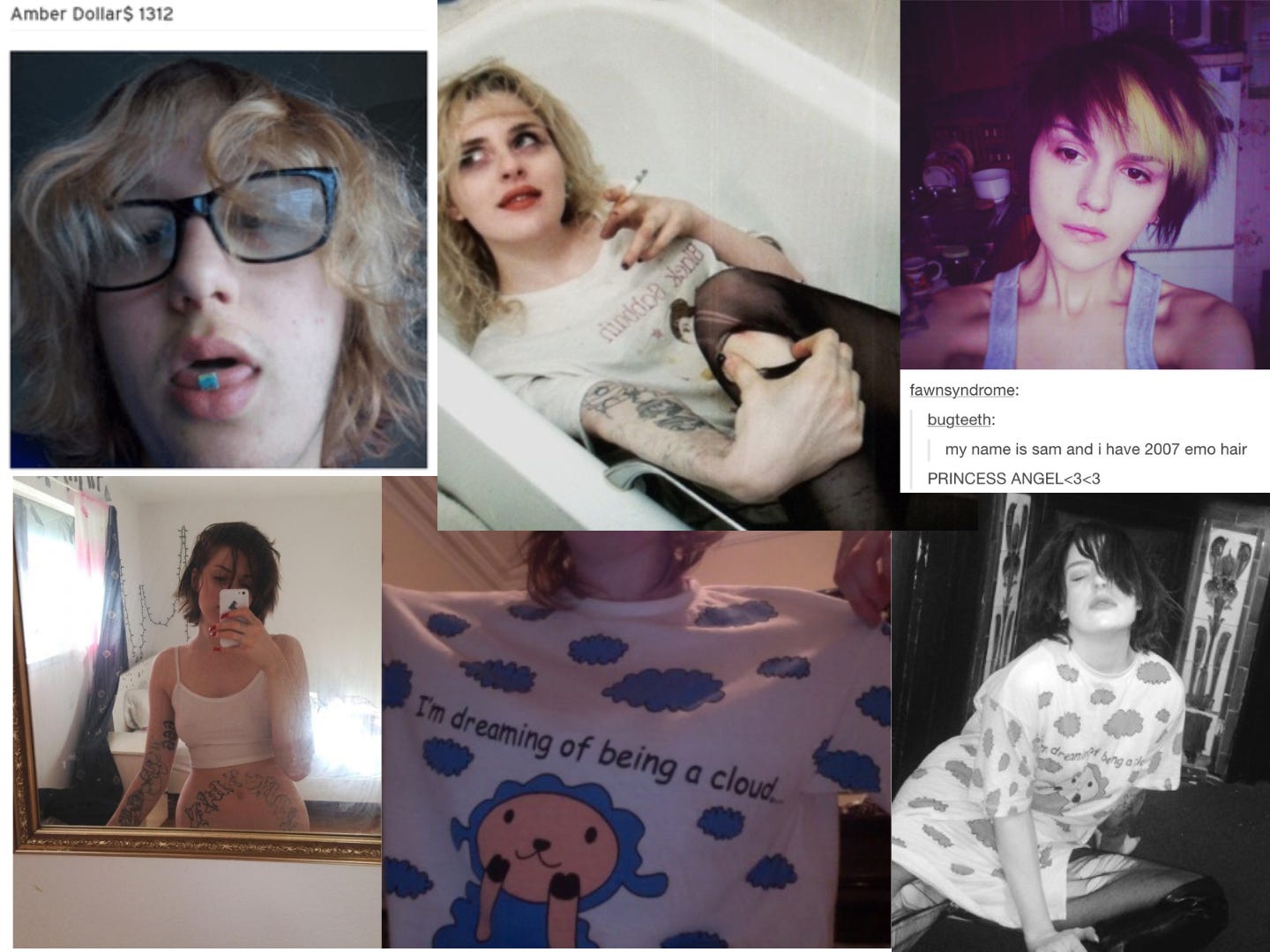
They were not performing, per se. Or they were performing the way anyone performs when they make art out of their own life. The line was genuinely hard to find. Either way, the platform’s reward structure didn’t discriminate. Disclosing trauma online generated followers, community, and protection. Being a victim of something sufficiently extreme made you seen and beloved in a way that ordinary suburban adolescent loneliness never could. The more extreme the suffering, the more devoted the audience.
This is the structural condition that made what happened next not just possible, but in a certain light, logical.
In 2015, a user posting under the name Soren Hayes (fawnsyndrome, shyfawn, sicklefawn, hurtc0re, faggotuglyhfukcingdickballs, umbillicalnoose, necrochotic, necromutilomania, oathful) published a document they referred to as their “Trauma Narrative” on Tumblr. It claimed to be a first-person account of nearly three years spent as a child sex trafficking victim in a Seattle warehouse operation.
Soren’s Trauma Narrative
The document Soren posted in April 2015 opened with a preamble that established its own vulnerability before launching into an account that claimed to begin when Soren was nine years old, newly moved to Seattle, and befriended a girl named Sam. What followed was extraordinary in its scope and its brutality: kidnapping, sado-masochistic child sexual abuse contained within a warehouse trafficking operation and multiple murders of children witnessed firsthand. It was written in all lowercases, which gave the piece a tone that felt rawer and more vulnerable, like something typed in a state of barely controlled distress.Upon immediate analysis, it becomes apparent that the work is a fabrication. The narrator’s voice is too controlled in the wrong places and sardonic and darkly witty at moments where genuine trauma would produce something less theatrical. At one point, while being driven to a cabin in the woods to be killed, Soren’s internal monologue is: “this is so fucking cliche. I thought of Danny’s horror movies again.” This is a literary voice performing world-weary detachment. It reads like a fictional character who has been written to seem hard, not like a child in danger.
Some scenes are almost comically absurd in their gratuitousness. At one point, Sam’s father bursts into the room while the two children are playing Kingdom Hearts on a PC emulator and beats the shit out of Sam without warning or explanation. Soren takes care to note that the Destiny Islands theme was playing softly in the background as the beating occurred. For those unfamiliar with the Destiny Islands theme, I have included it below (in the spirit of full journalistic transparency).
Plenty of other scenes read more like adolescent fantasy than anything resembling the actual experience of a trafficking victim. A client who boils rats alive one by one before getting to the actual abuse, atmosphere-building that belongs in a corny horror movie, not a trafficking narrative. The spider scene, in which spiders are inserted into the children’s orifices and then eaten, followed immediately by the remark that Soren couldn’t eat spaghetti for years afterward. Sam, locked in a room mid-psychotic episode covered in blood, being calmed down by Soren humming the Winnie the Pooh theme song. And perhaps most memorably, Sam spending the night locked in a closet with a dismembered corpse, having a full animated conversation with the severed head, then greeting the men who open the door the next morning by asking if she could have some orange juice.
The horror in Soren’s trauma narrative escalates with a fictional logic, each section trying to outdo the last, piling on detail with the compulsive energy of a high school fan fiction author. The details are specific in all the wrong places- gratuitously precise about torture devices and punishments, while being vague about anything that could be independently verified. The “best gang rape victim” line, delivered as sardonic self-assessment from Soren’s protagonist/self-insert, is perhaps the most telling moment in the entire document. No survivor frames their own victimization this way in genuine recall. It is the kind of dark gallows humor that gets written about trauma survivors in fiction. Then there is the spider detail: spiders inserted into the children’s bodies, forced consumption. Gratuitous to the point of absurdity, and very specifically the kind of shock content that circulated in dark corners of the internet, Soren demonstrably frequented.
Threaded through the entire narrative, functioning as its emotional skeleton, is Kingdom Hearts. The protagonist identifies as Sora, the game’s main character. The love interest is Sam, written as somewhere between Kairi’s tenderness and Riku’s darkness. When Soren comforts the injured Sam on a bathroom floor, he tells her they are on a boat to Destiny Islands, that they will get married under the paopu tree, and rocks her back and forth to “make it feel real”. It reads exactly like a teenage fan fiction writer’s idea of a tragic romantic scene, not a memory.
Sam herself is the clearest tell of all. Though Sam is based on a real person Soren encountered, she is not a person in this narrative but a literary archetype — and a fairly predictable one for that specific era of Tumblr culture. The vulnerable wolf girl; brutalized, and so she became brutal herself. Three-dollar thrift store dresses and leather jackets. A white t-shirt that said “i’m dreaming of being a cloud.” She had her head in the stars. She was only afraid of herself. She felt at home in gas stations and hospitals. She looked out for other girls and would turn a wild party into a quiet group of drunk girls sitting on the kitchen floor, braiding each other’s hair, telling secrets. Readers of a certain corner of Tumblr will recognize this character immediately, because she already existed there, under the name Ginger Bronson.
Ginger Bronson was the stage name of Kayla Day, a poet, musician, and blogger who was one of the more recognizable figures in Tumblr’s dark underground circa 2012-2016. Her writing was raw, confessional, and genuinely beautiful in its own right — a stream of consciousness dispatches about trauma, addiction, poverty, and survival. Her visual identity was specific and instantly recognizable: tattoos, many of which had been given to her against her will by an abuser, photographs of herself that made devastation look beautiful. She did runway modeling, including work connected to Yves Saint Laurent. She was, in the language of that world, extremely real.
Sam’s fake Facebook page, created and maintained by Soren, used Bronson’s photograph as its profile picture and claimed Sam had modeled for Yves Saint Laurent — exactly what Bronson had actually done. This is not aesthetic inspiration. This is identity theft in service of a narrative, the appropriation of a real person’s real trauma to lend credibility to a fiction.
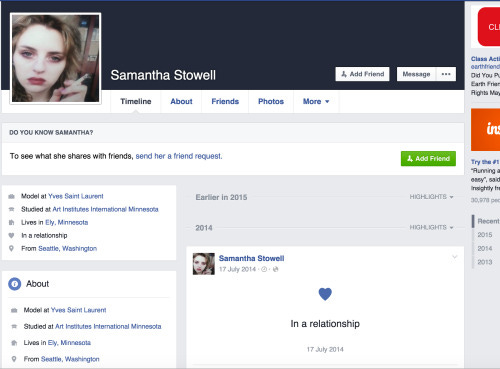
The deeper connection is harder to prove but impossible to ignore. Sam’s entire personality maps almost perfectly onto how Bronson presented during her most active period — the dreamy dissociation, the protective maternal instinct, the eating disorder, the drug addiction, the tattoos given by an abuser, the quality of being simultaneously feral and tender. Soren didn’t just borrow Bronson’s image. He borrowed her entire identity and gave it to a character.
What Soren constructed was a character study, complete with a protagonist, a love interest, a supporting cast, and a carefully maintained aesthetic, borrowing its emotional architecture from Kingdom Hearts, its central character from Ginger Bronson, and its authority from the Tumblr ecosystem that had taught its author exactly what a “trauma narrative” was supposed to look and feel like.
A full compilation of Soren’s Trauma Narrative is available to download here: https://files.catbox.moe/2x4fo2.zip — the zip file contains two formats of the complete document (Standard and eBook-formatted PDF), including all three versions of the narrative and a master edition combining them into a single running text.
Revisions to the Trauma Narrative
Soren didn’t write one version of this story. He wrote three.
The first, posted in April 2015, established the baseline: the Seattle warehouse, the Kingdom Hearts mythology, Sam as a Ginger Bronson surrogate, and the cinematic pacing. The first version included a keyboard smash buried in the post tags: “Gos. Fucking ycj fucj fuck fuck did d cjdjsnf.” A simulation of a writer so overwhelmed by their own material they lose motor control, a technique, borrowed from the same Tumblr aesthetic vocabulary that produced everything else in the document.
Six months later, in October 2015, a second version appeared. The pain room, previously described as stocked with BDSM gear, was reframed as a Tor-based livestreaming operation, grafting real dark web trafficking discourse that had been circulating in the media onto the narrative. Most significantly, a new character appeared: Mousy, who exists in the narrative solely to be dismembered in extreme detail before having a conversation with Sam post-mortem. And Kayla’s death changed entirely. In V1 she is shot accidentally by a nervous client. In V2 she dies during a livestreamed torture sequence.
Three years have passed. In October 2018, a third version appeared under the Instagram handle “Oathful”. Gone was the Seattle Montessori school, the sleepover, Sam’s father appearing over the bed. In its place: India. An orphanage. Abuse beginning in preschool when men entered the classroom and selected children. The operation was reframed as a multinational network connected to law enforcement, the military, and registered doctors.
Across all three versions, one element remains completely stable - Sam. The vulnerable wolf girl, the dreamy dissociation, the protective maternal instinct. Everything else in the narrative is negotiable (the origin story, the deaths, the institutional scope), but Sam is not. She is the emotional core the author cannot let go of, even as everything around her gets rewritten from scratch.
The Cast
The trauma narrative had a cast of characters, and most of them were real people. Not real in the sense that the events described were real (they weren’t) but real in the sense that behind each fictional name was an actual person whose identity, image, and in some cases whose genuine trauma, had been borrowed without consent to furnish Soren’s story. This is where the narrative stops being merely a curiosity of internet culture and becomes something with documented victims.
Sam was Samantha Stowell, a girl Soren had briefly known in high school. She really had a twin sister and her father’s initials matched the initials of the abuser in the narrative. When an anonymous user contacted Samantha in 2016 to let her know Soren was still writing about her, her response was measured, reassuring that Lawyers had already been involved and It was, she said, old news. “Nothing they say is true. When I knew them, they were just a little kid that liked Kingdom Hearts and had a weird mom. They only went to my house once and it’s nothing like they described.” Her statement is worth reading in full, because it is the clearest possible summary of what actually happened.
Danny was Ashton Drew, a Tumblr user whose photos Soren had been collecting since at least middle school. Soren constructed an entire fictional person around Drew’s image: a transgender boy named Danny who huffed paint thinner, loved My Chemical Romance, made flower crowns and eventually hanged himself after being outed and gang raped on his way home from school. When Soren posted Danny’s suicide in the voice of Danny’s brother Christopher, the post went viral. A Twitter campaign, #SingItForChristopher, emerged in response. Thousands of people mourned a person who had never existed, using the face of a person who was very much alive.
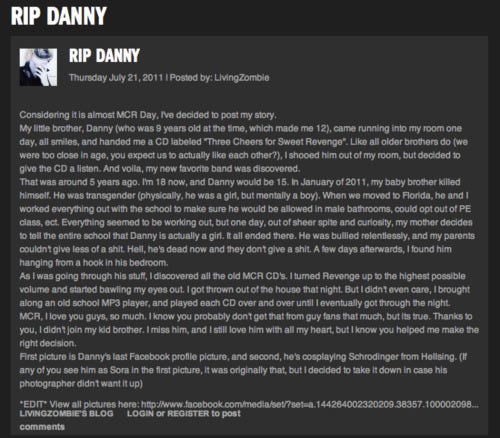
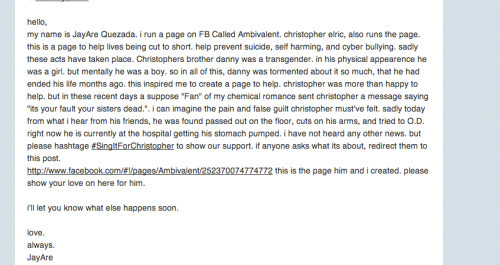
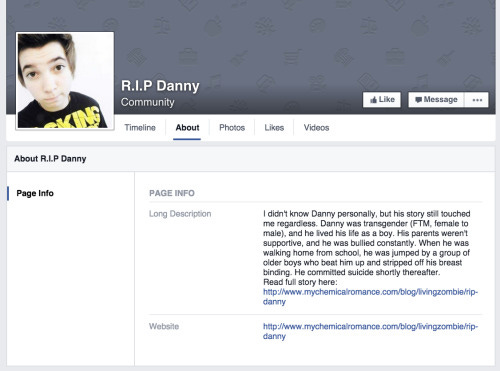
When Drew eventually found out, his response captured something essential about what Soren’s behavior actually cost real people. He had been stalked for years, and his image had been used to construct a dead person. He claims to have lost years to the anxiety of not knowing what else was out there, of not being able to trust what was on the internet about him. “I hate you,” he wrote, “because you ruined about two years of my life with your little fucking game.”
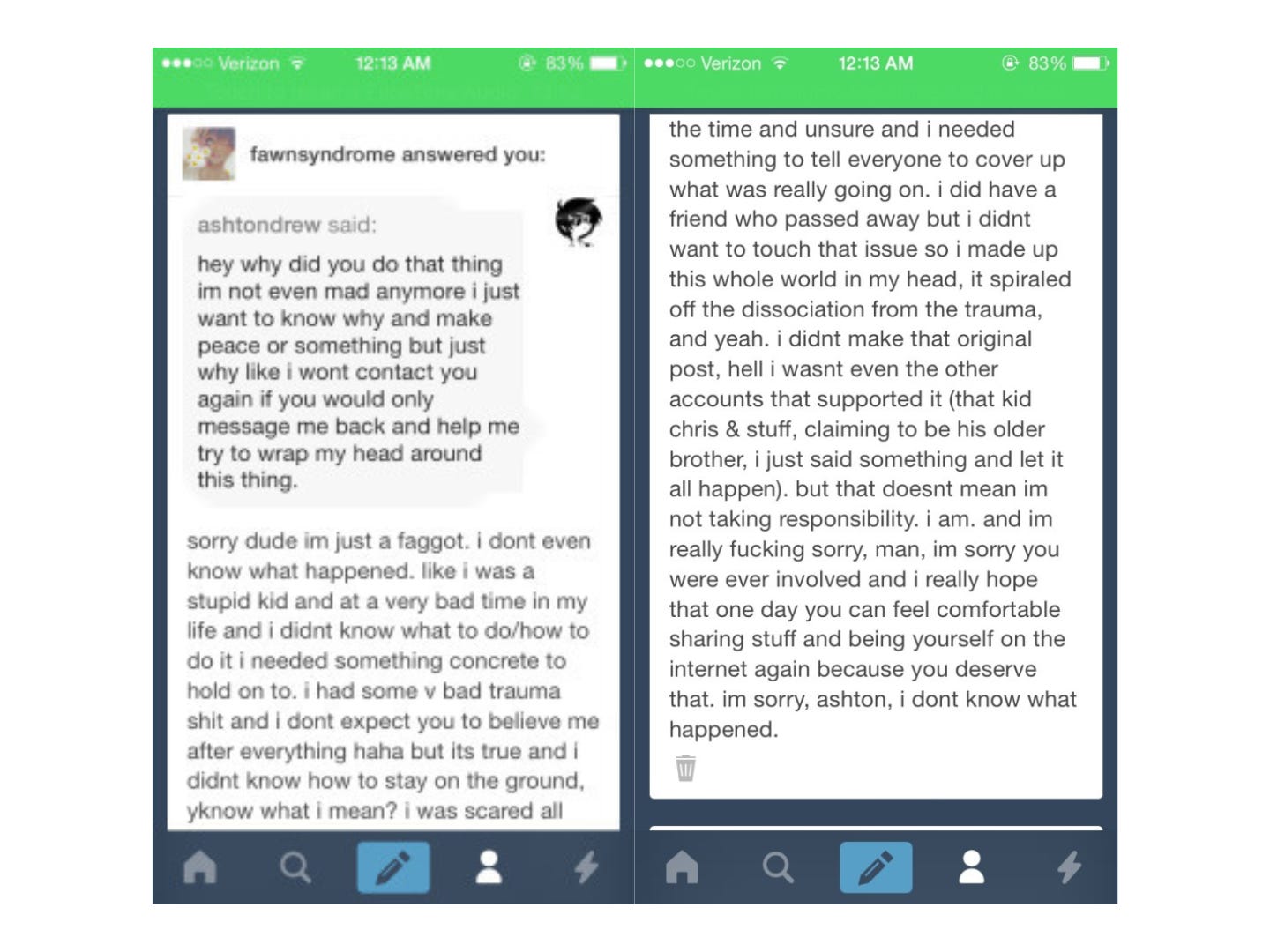
Soren admits to stalking Ashton Drew when called out directly on their FawnSyndrome blog.
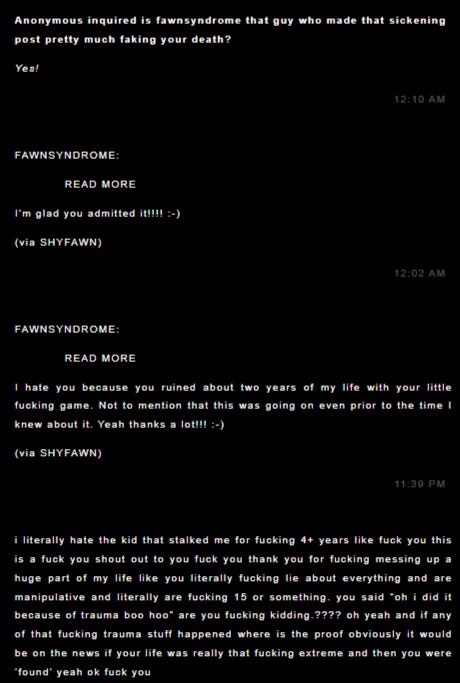
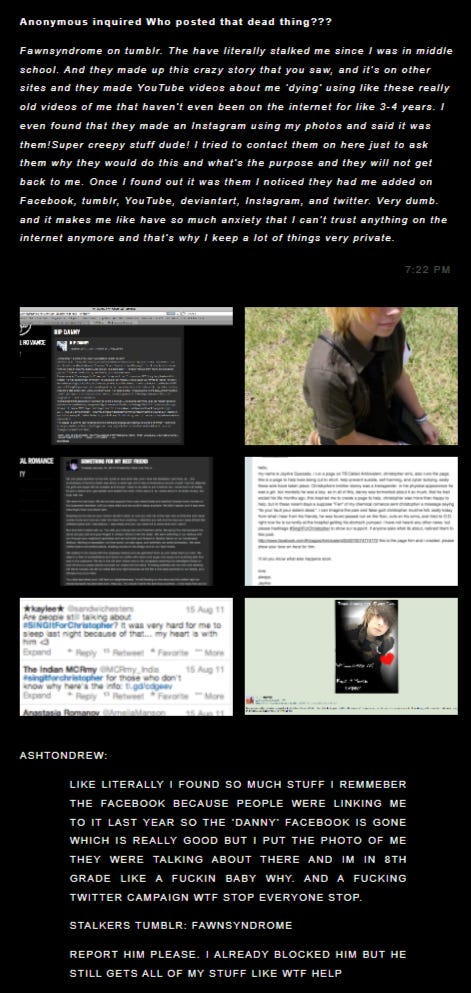
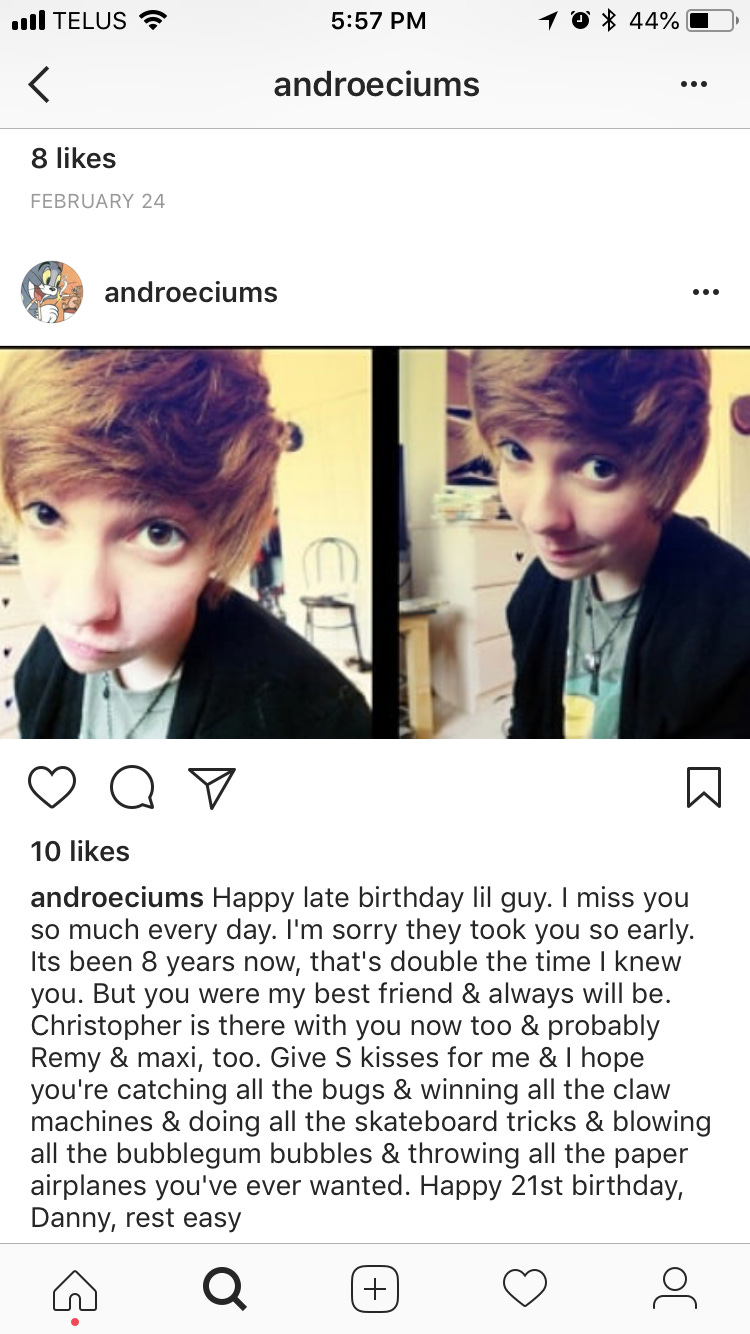
Despite being called out directly by Ashton Drew for stealing his photos, Soren continued using them in reference to Danny as late as 2018 — years after Drew had gone public about the stalking.
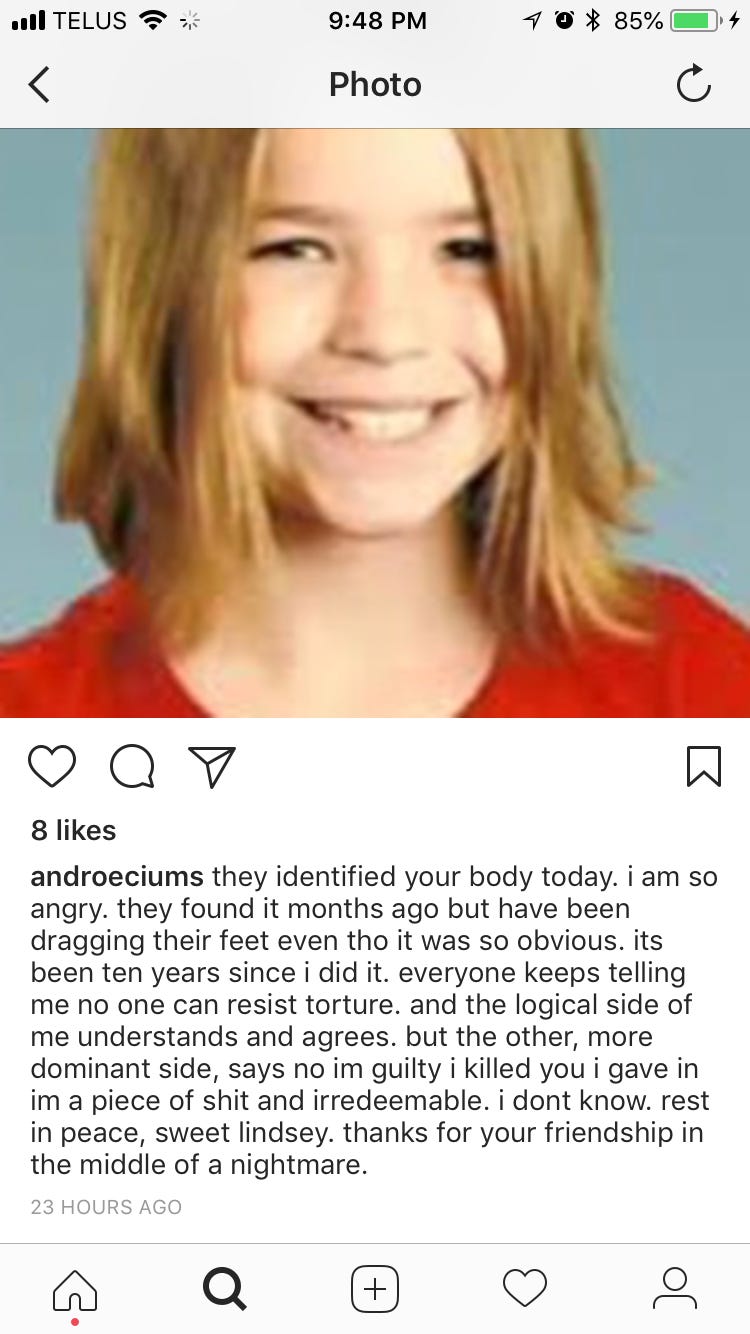
Then there was Lindsey Baum. In October 2015, Soren posted a screenshot from a missing persons database (a photograph of a real ten year old girl who had gone missing in 2009) and implied she had been part of the trafficking ring. A real missing child, whose family had spent years not knowing what happened to her, drafted into someone else’s fiction as supporting evidence. Lindsey Baum’s remains were eventually found in 2018. She had been murdered.

There is a version of Soren’s story that is cynical: a calculated performance by someone who understood the platform’s reward structure and exploited it deliberately. There is another version that is more complicated: a genuinely unwell person whose delusions were fed rather than challenged by every system they encountered, from the Tumblr ecosystem that rewarded escalation to the parents and therapists who appear to have reinforced rather than questioned the narrative. The truth is probably somewhere neither version fully captures.
So, who really was Soren Daniel Hayes?
Then there was Lindsey Baum. In October 2015, Soren posted a screenshot from a missing persons database (a photograph of a real ten year old girl who had gone missing in 2009) and implied she had been part of the trafficking ring. A real missing child, whose family had spent years not knowing what happened to her, drafted into someone else’s fiction as supporting evidence. Lindsey Baum’s remains were eventually found in 2018. She had been murdered.
Who was Soren Daniel Hayes Really?
Soren did not emerge from nowhere. Tumblr’s trauma economy had its own aesthetics, its own hierarchies, and its own reward structures. It created a specific kind of hunger in its audience for suffering that was extreme enough to be interesting, beautiful enough to be bearable, and authentic enough to justify the attention it received. Soren fed that hunger with remarkable precision - Every element of the narrative was calibrated to what the platform craved: the vulnerability, the literary voice, the romanticized relationship at the center, the Kingdom Hearts mythology, and the Ginger Bronson soft grunge aesthetics.There is a version of Soren’s story that is cynical: a calculated performance by someone who understood the platform’s reward structure and exploited it deliberately. There is another version that is more complicated: a genuinely unwell person whose delusions were fed rather than challenged by every system they encountered, from the Tumblr ecosystem that rewarded escalation to the parents and therapists who appear to have reinforced rather than questioned the narrative. The truth is probably somewhere neither version fully captures.
So, who really was Soren Daniel Hayes?
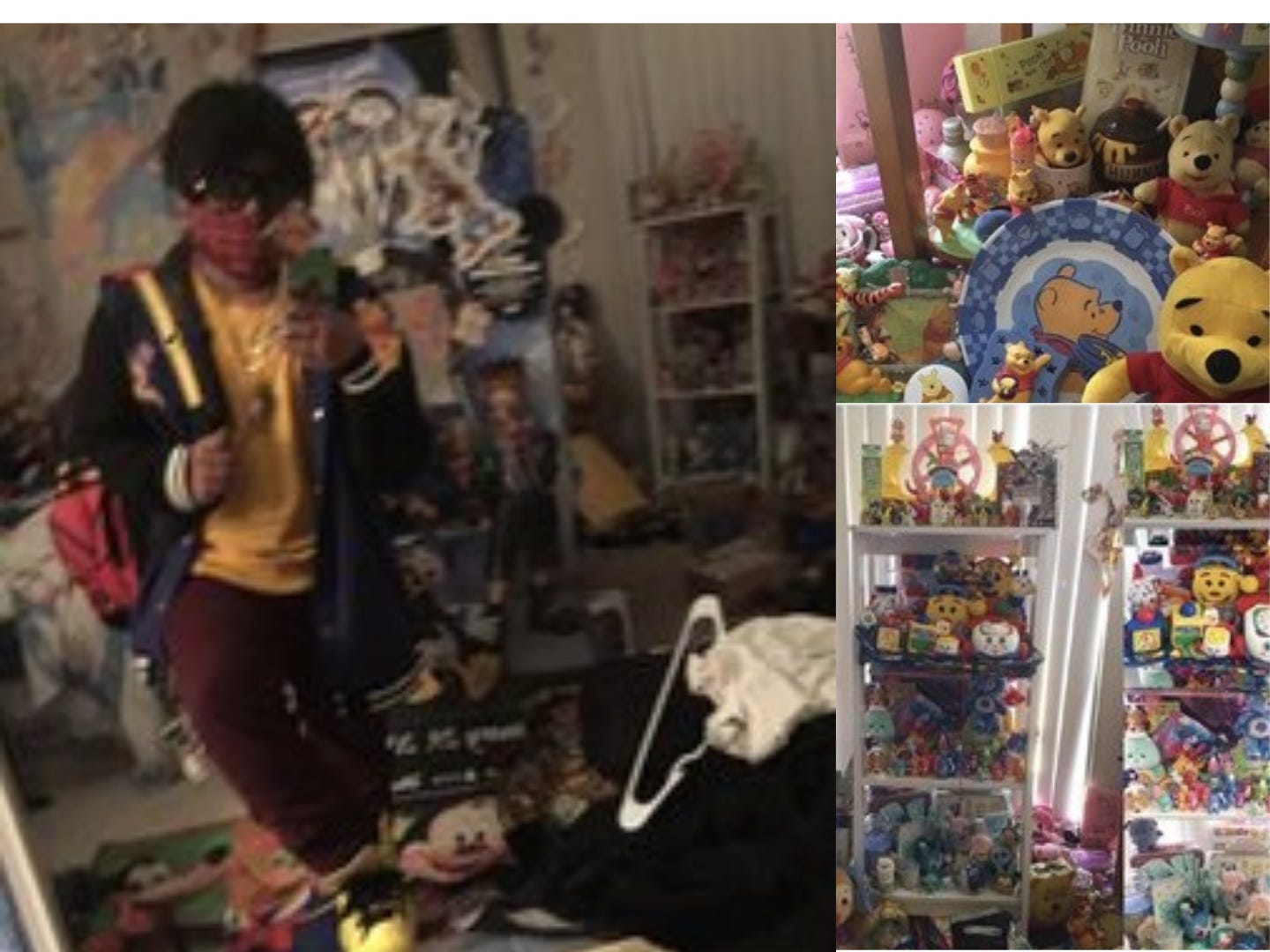
Across four lolcow threads spanning 2015 to 2021, a more mundane picture of Soren’s actual life assembled itself in the background of the narrative - visible in room photos packed with children’s toys, Depop listings for secondhand Hot Topic clothing, Instagram stories featuring drug paraphernalia, and the occasional slip of verifiable detail.

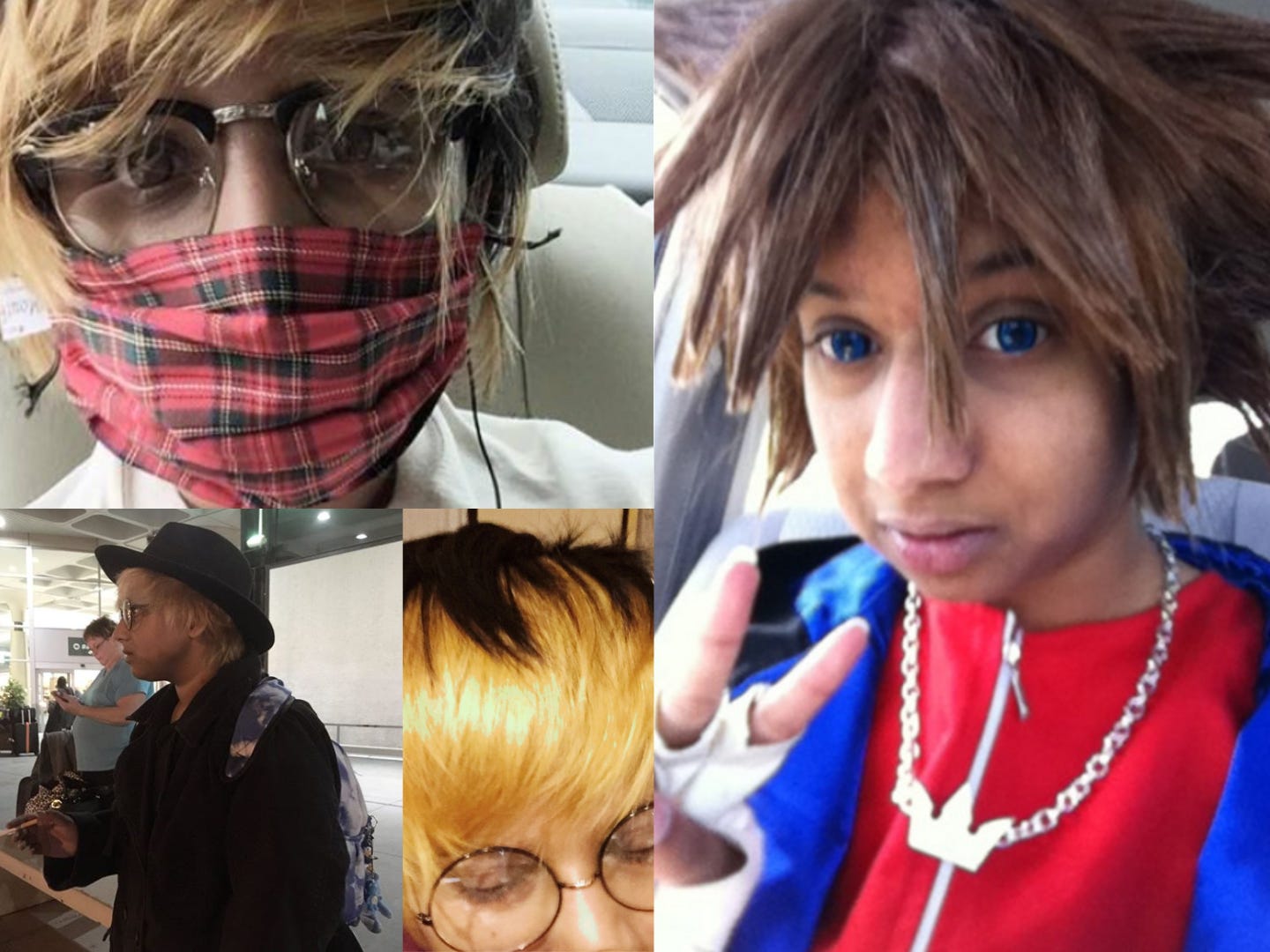
Soren Danial Hayes was a tans-identified female, born with the birth name, Priya (last name uncertain- Sweeny and then later changed to Hayes). S/he was adopted from India alongside a sister named Anjali, by older white parents living in the Seattle suburbs. Soren’s family was upper-middle class and his father worked as a scientist. Soren’s mother was a physician’s assistant, which reportedly enabled Soren’s early access to testosterone. Soren began transitioning around age thirteen with top surgery occurring in early adolescence. The family eventually settled in San Diego.

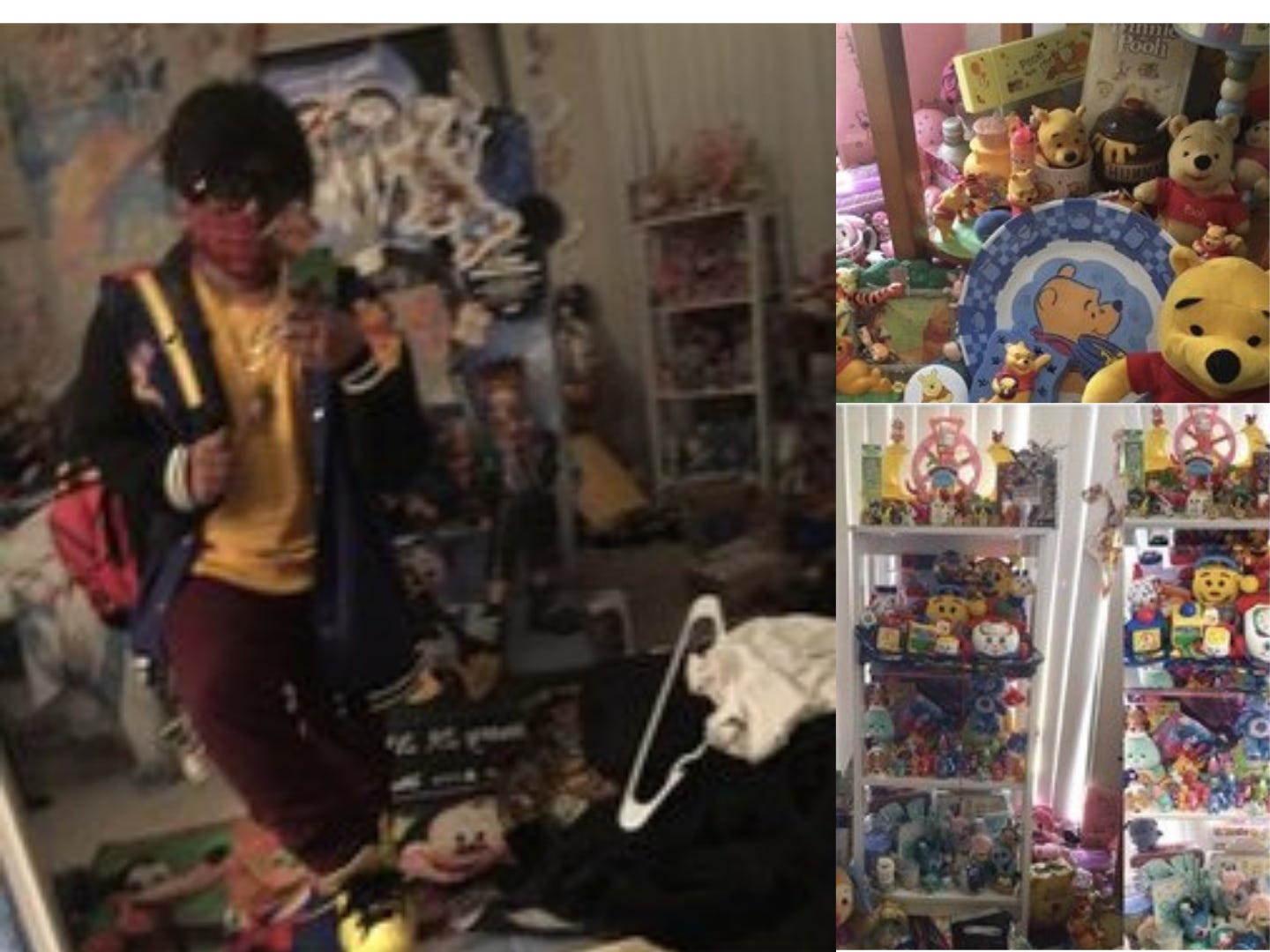
The bedroom tells its own story. Photos that surfaced over the years show a room that looks less like a living space and more like a shrine. Floor to ceiling Kingdom Hearts merchandise, plush toys, figurines, Disney collectibles, Mark Ryden prints, Pullip dolls, cosplay materials. Observers on Lolcow.farm noted the sheer volume of it, the way it consumed every available surface. One described it as looking like “a serial killer’s den.” Another noted it looked like “an edgy Pee Wee Herman.” It was the room of someone who had retreated very far inside a private world.
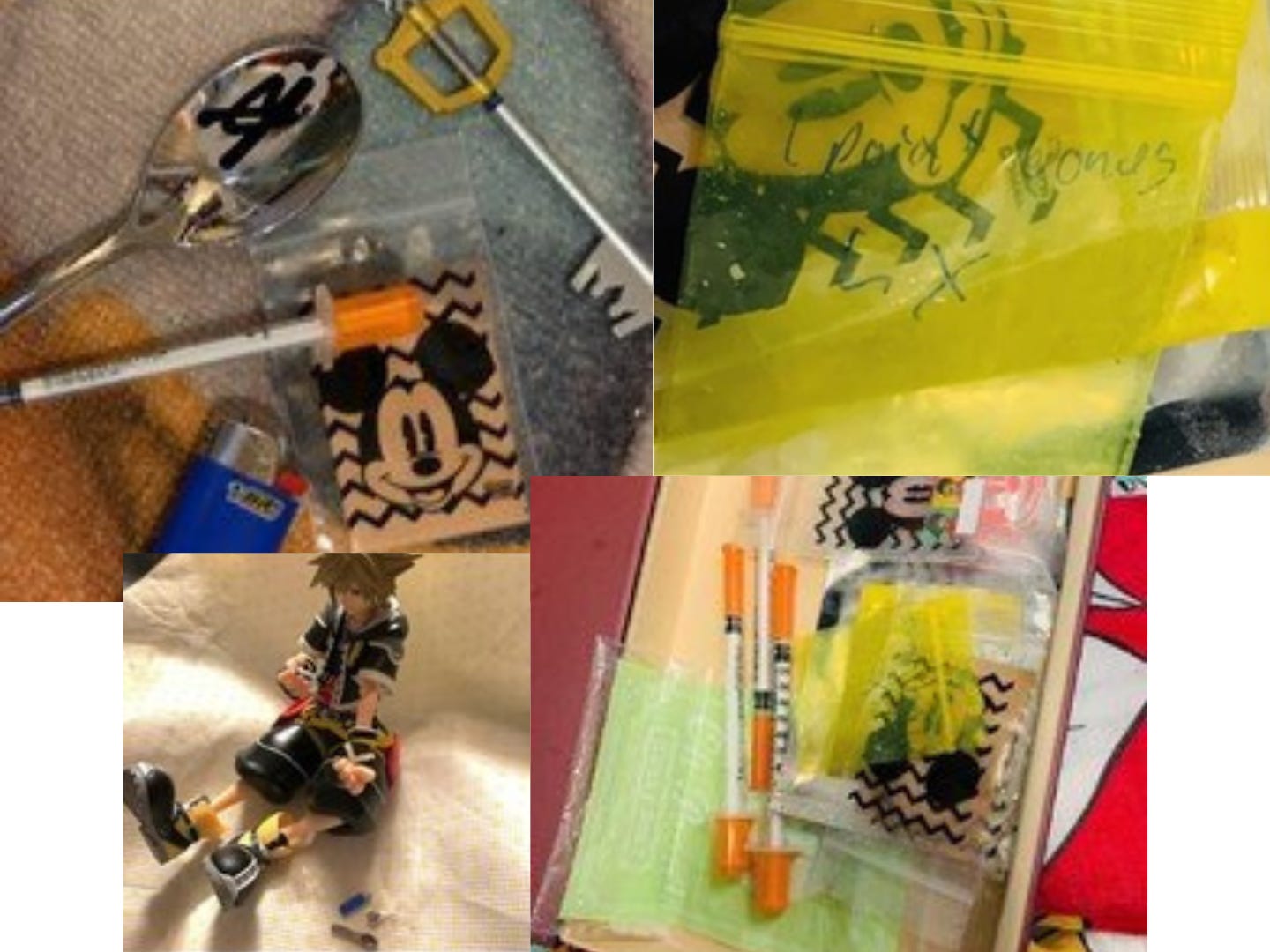
The drug use Soren claimed both in the narrative and on social media — heroin, meth, ketamine — was largely unverifiable and in several cases demonstrably staged. Photos of paraphernalia showed unused needles, clean spoons, and suspiciously fine powder in Mickey Mouse branded baggies that appeared to have been purchased online as props. The aesthetic of drug use was the point, not the drugs themselves. The ketamine treatments, by contrast, appear to have been real and medically supervised. Expensive but consistent with the family’s financial resources and the mother’s medical background but notably less glamorous than the street drug narrative Soren preferred to project.

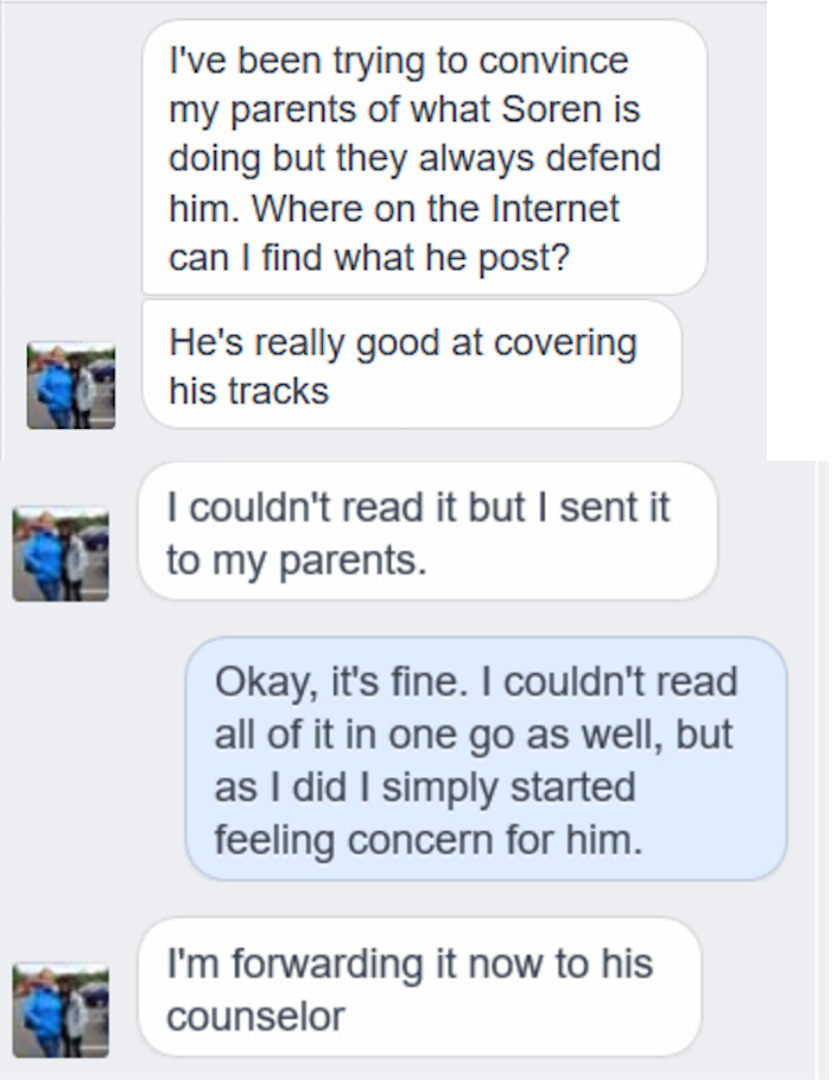
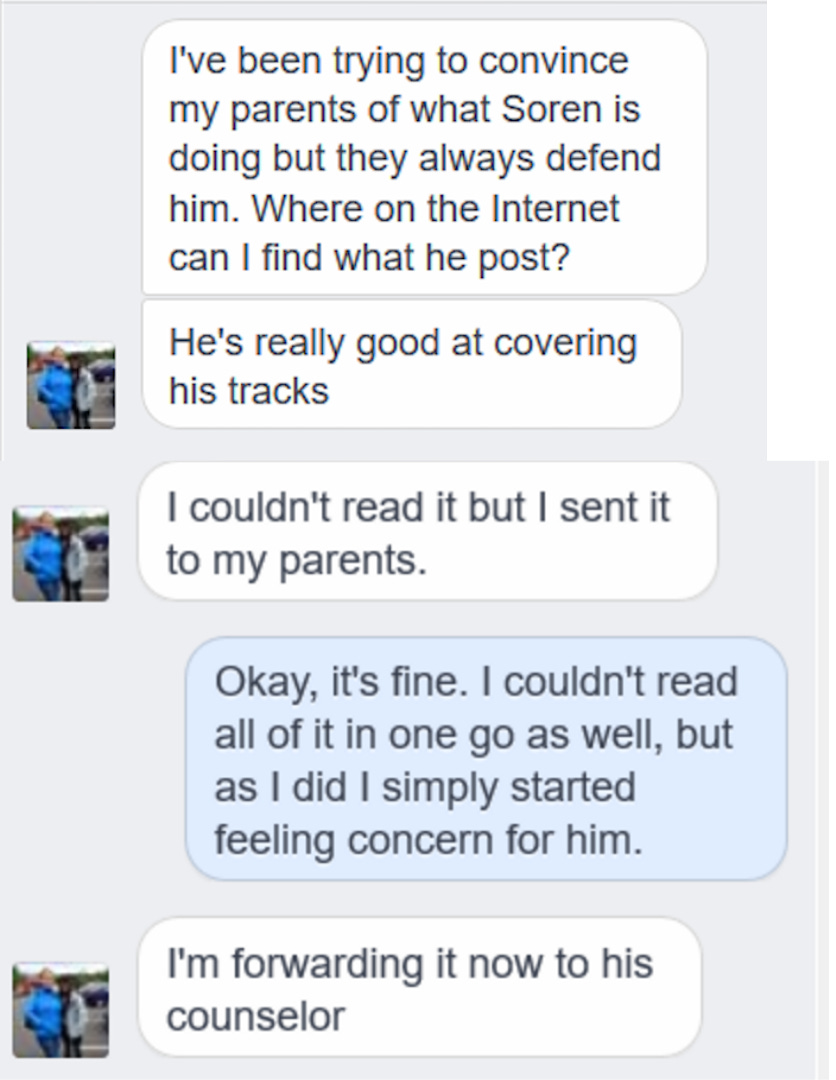
Soren’s older adoptive sister Marley was notified about the online activity on multiple occasions. Community members reached out directly, and the lolcow threads document at least one instance of her being contacted about the trauma narrative and the fake profiles. She acknowledged awareness of the situation and indicated that their parents had been informed as well. What the family actually knew, and to what degree they believed or dismissed it, remains genuinely unclear. Soren’s father reportedly reacted with anger when he discovered the Instagram activity. The mother appears to have been more accommodating, though whether she accepted the narrative at face value or simply chose not to challenge it is unknown. What is documented is that awareness of the situation reached the family repeatedly over the years, and the behavior continued regardless.
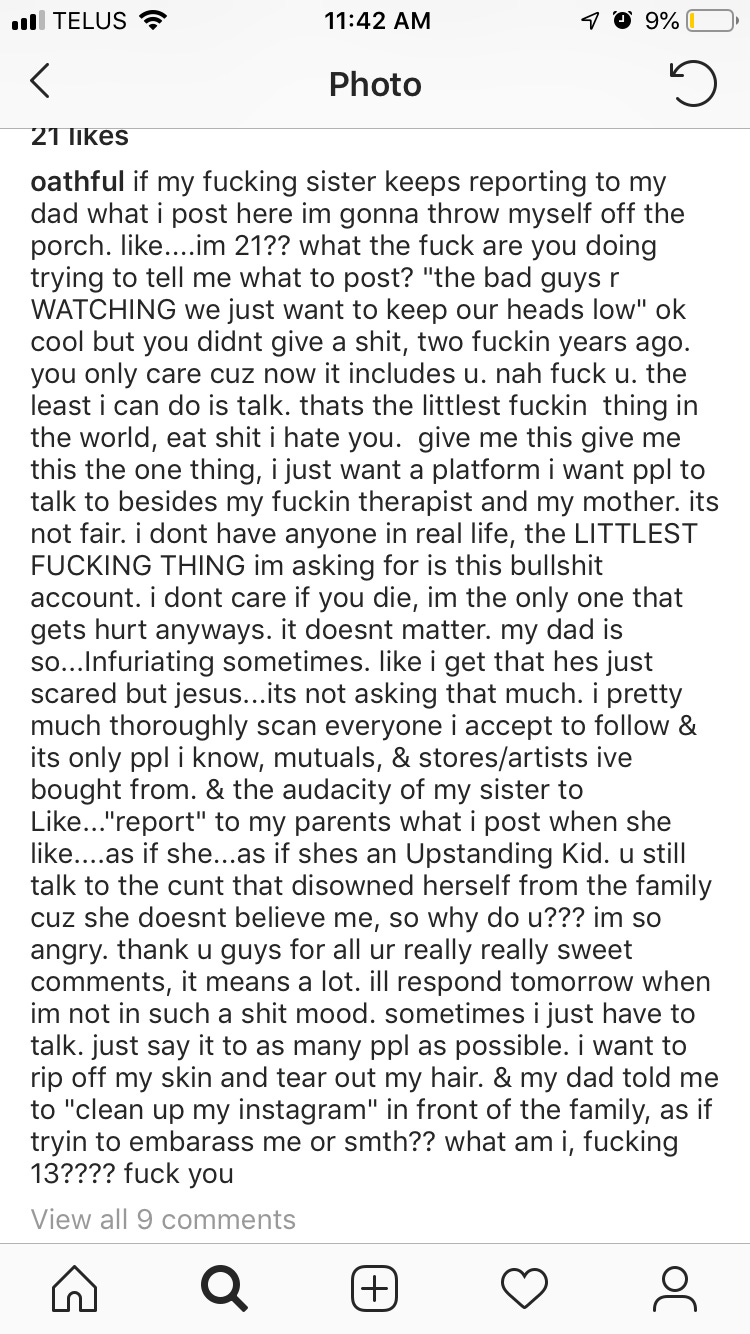
Suicide attempts were a recurring feature of Soren’s online presence for years, so frequent, and so frequently survived, that when the real thing came, many observers initially assumed it was another performance. A fake death notice posted by a “brother” in December 2015 had already established the template. The Amazon account showing activity days after the alleged death muddied the waters further.
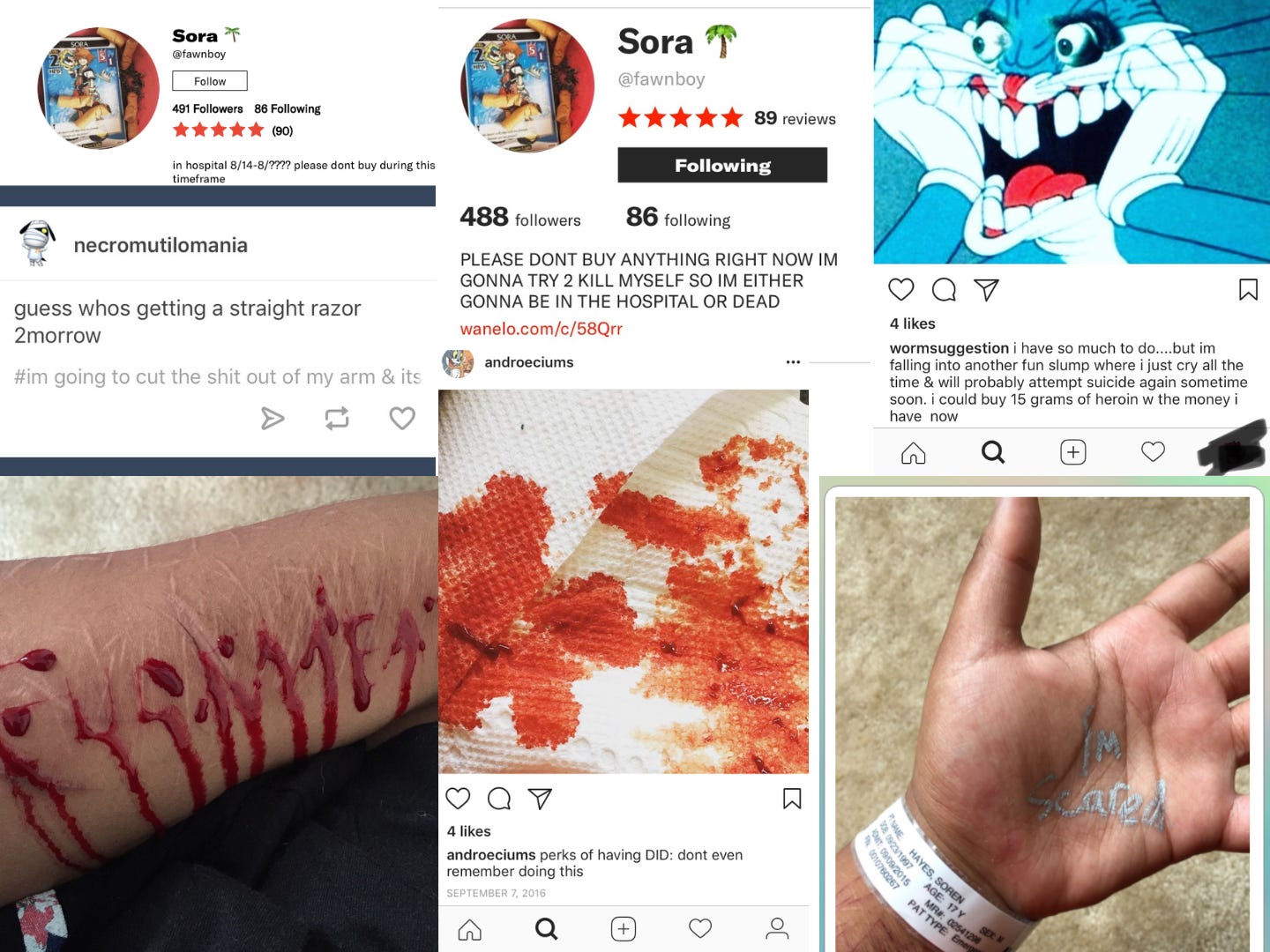
But on January 13, 2021, an obituary appeared on the Dignity Memorial funeral home website. Soren Daniel Hayes, born September 23, 1997. Died January 13, 2021. Age twenty-three. Under the care of El Camino Memorial Park, Sorrento Valley, San Diego. A sister posted a brief tribute on her private Instagram. The wording was careful and not quite warm with references to mental illness, to patience, to no longer suffering. The tone of someone who had been bracing for this for a long time.

Soren received a phalloplasty five months earlier, in August 2020. The surgery had not gone well. The graft failed, and photos posted publicly showed severe necrotic tissue. There were multiple returns to hospital, fabricated texts blaming a transphobic nurse, graphic wound documentation shared on Instagram with the same matter-of-fact exhibitionism that had characterized the trauma narrative for years. And then, eventually, silence.
It is worth noting that phalloplasty carries one of the highest post-operative suicide rates of any gender affirming procedure. The gap between what the surgery is imagined to resolve and what it actually can resolve is, for some people, insurmountable. Whether this was a factor in Soren’s death is unknown. What is known is that the person who had spent a decade writing about wanting to die eventually did.
What Soren actually experienced in childhood remains genuinely unknown. People who knew them in person described a happy-looking kid who became, somewhere in the transition to adolescence, something else entirely. There was almost certainly real pain underneath the fabrication - the compulsiveness of the behavior, the decades of investment in a single narrative, the inability to stop even when lawyers and callouts and public humiliation made stopping the obvious choice, all of this points toward something more than simple cynicism. Whether that something was untreated, psychosis, a personality disorder, genuine trauma elaborated beyond recognition, or some combination of all three, no one outside the family will ever know for certain.
Kingdom Hearts, the game that runs through the trauma narrative like a spine, is about children who lose their worlds and spend years searching for a way back to something that may no longer exist. It is about memory, and constructed realities, and the question of whether a self-built out of borrowed pieces is still a self. Soren named themselves after its protagonist. Used its mythology as the emotional architecture of a document meant to explain, or justify, or simply make bearable, whatever it was they were actually carrying. We don’t get to know what that was. The narrative, in all three versions, was too loud for the truth to be audible.
Soren Danial Hayes was a tans-identified female, born with the birth name, Priya (last name uncertain- Sweeny and then later changed to Hayes). S/he was adopted from India alongside a sister named Anjali, by older white parents living in the Seattle suburbs. Soren’s family was upper-middle class and his father worked as a scientist. Soren’s mother was a physician’s assistant, which reportedly enabled Soren’s early access to testosterone. Soren began transitioning around age thirteen with top surgery occurring in early adolescence. The family eventually settled in San Diego.
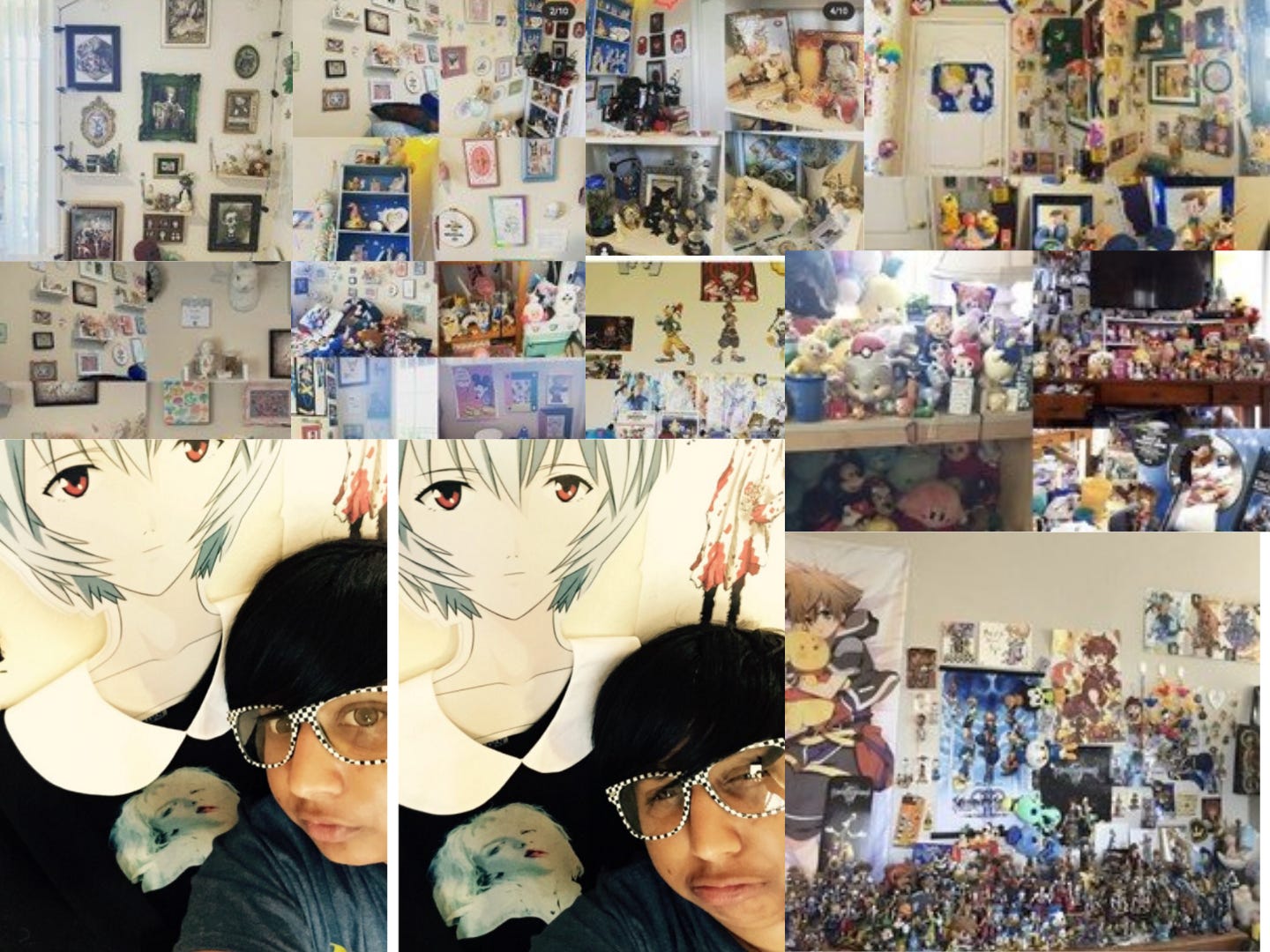
The bedroom tells its own story. Photos that surfaced over the years show a room that looks less like a living space and more like a shrine. Floor to ceiling Kingdom Hearts merchandise, plush toys, figurines, Disney collectibles, Mark Ryden prints, Pullip dolls, cosplay materials. Observers on Lolcow.farm noted the sheer volume of it, the way it consumed every available surface. One described it as looking like “a serial killer’s den.” Another noted it looked like “an edgy Pee Wee Herman.” It was the room of someone who had retreated very far inside a private world.
The drug use Soren claimed both in the narrative and on social media — heroin, meth, ketamine — was largely unverifiable and in several cases demonstrably staged. Photos of paraphernalia showed unused needles, clean spoons, and suspiciously fine powder in Mickey Mouse branded baggies that appeared to have been purchased online as props. The aesthetic of drug use was the point, not the drugs themselves. The ketamine treatments, by contrast, appear to have been real and medically supervised. Expensive but consistent with the family’s financial resources and the mother’s medical background but notably less glamorous than the street drug narrative Soren preferred to project.
Soren’s older adoptive sister Marley was notified about the online activity on multiple occasions. Community members reached out directly, and the lolcow threads document at least one instance of her being contacted about the trauma narrative and the fake profiles. She acknowledged awareness of the situation and indicated that their parents had been informed as well. What the family actually knew, and to what degree they believed or dismissed it, remains genuinely unclear. Soren’s father reportedly reacted with anger when he discovered the Instagram activity. The mother appears to have been more accommodating, though whether she accepted the narrative at face value or simply chose not to challenge it is unknown. What is documented is that awareness of the situation reached the family repeatedly over the years, and the behavior continued regardless.
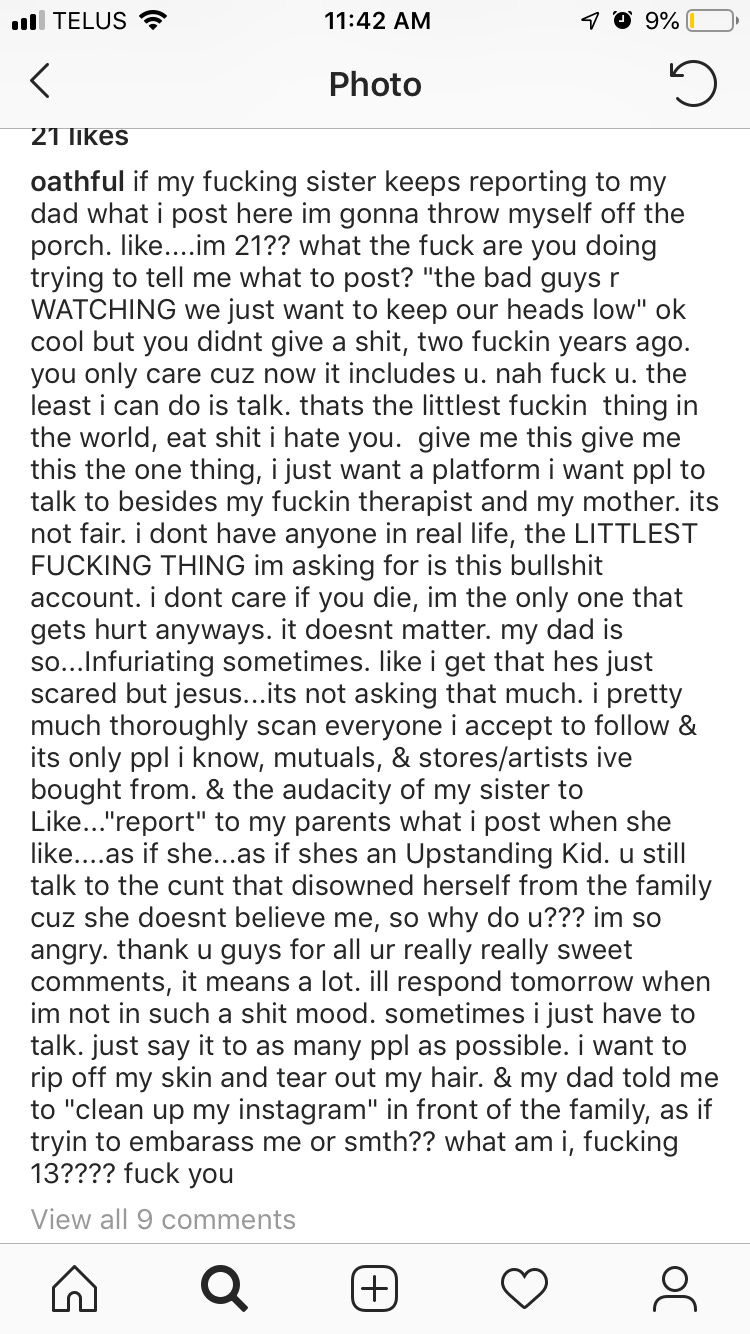
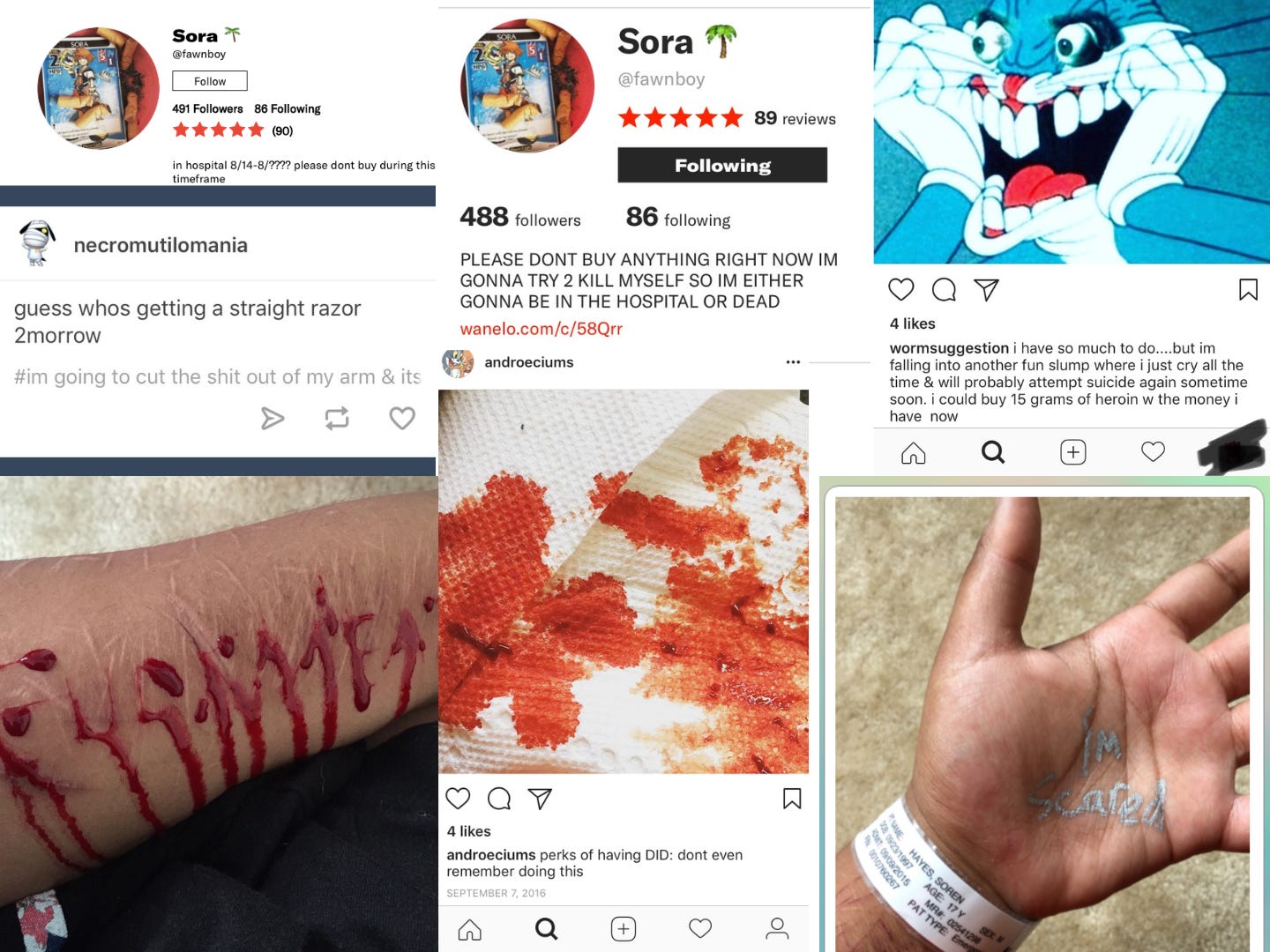
Suicide attempts were a recurring feature of Soren’s online presence for years, so frequent, and so frequently survived, that when the real thing came, many observers initially assumed it was another performance. A fake death notice posted by a “brother” in December 2015 had already established the template. The Amazon account showing activity days after the alleged death muddied the waters further.
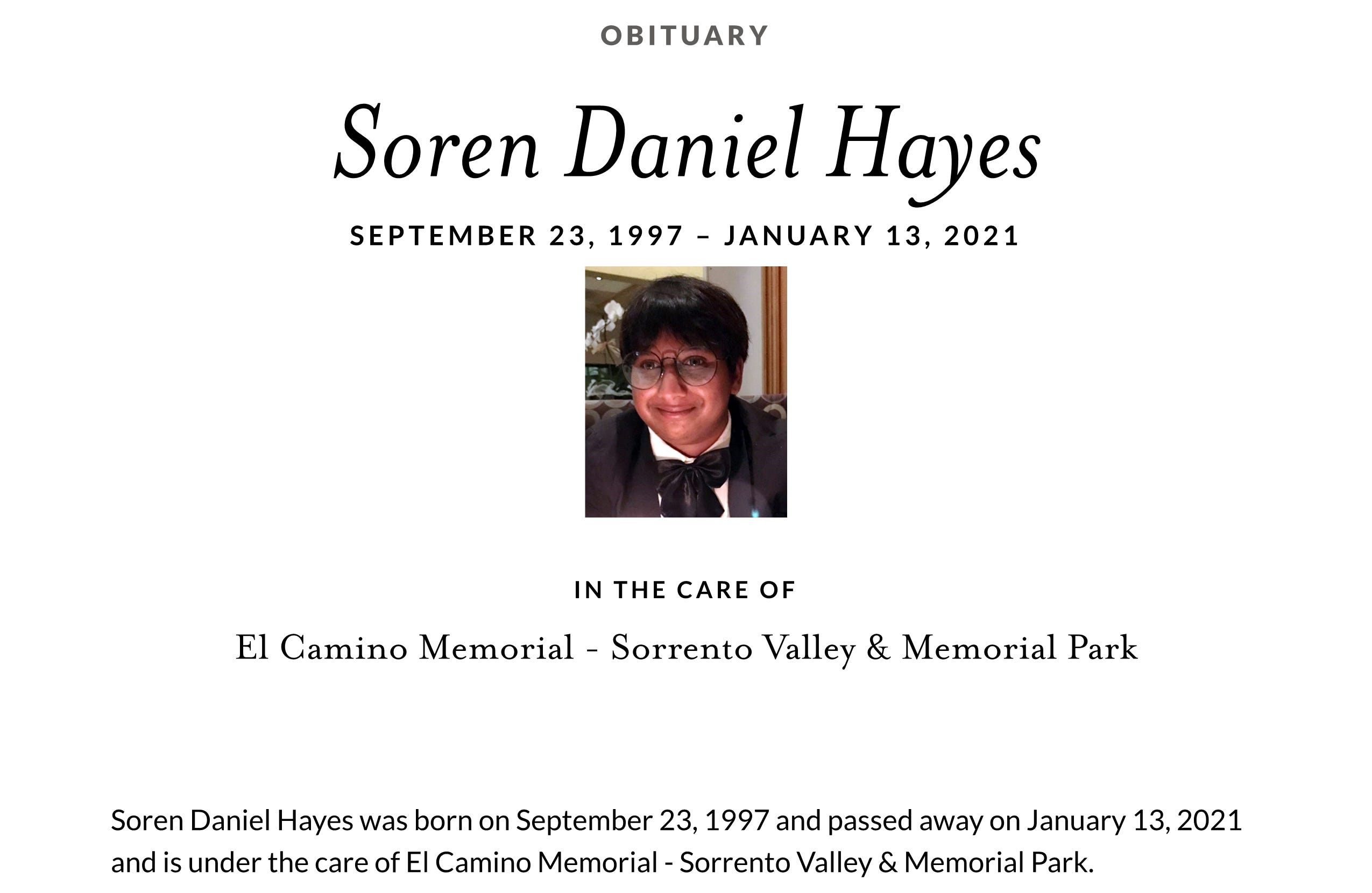
But on January 13, 2021, an obituary appeared on the Dignity Memorial funeral home website. Soren Daniel Hayes, born September 23, 1997. Died January 13, 2021. Age twenty-three. Under the care of El Camino Memorial Park, Sorrento Valley, San Diego. A sister posted a brief tribute on her private Instagram. The wording was careful and not quite warm with references to mental illness, to patience, to no longer suffering. The tone of someone who had been bracing for this for a long time.
Soren received a phalloplasty five months earlier, in August 2020. The surgery had not gone well. The graft failed, and photos posted publicly showed severe necrotic tissue. There were multiple returns to hospital, fabricated texts blaming a transphobic nurse, graphic wound documentation shared on Instagram with the same matter-of-fact exhibitionism that had characterized the trauma narrative for years. And then, eventually, silence.
It is worth noting that phalloplasty carries one of the highest post-operative suicide rates of any gender affirming procedure. The gap between what the surgery is imagined to resolve and what it actually can resolve is, for some people, insurmountable. Whether this was a factor in Soren’s death is unknown. What is known is that the person who had spent a decade writing about wanting to die eventually did.
What Soren actually experienced in childhood remains genuinely unknown. People who knew them in person described a happy-looking kid who became, somewhere in the transition to adolescence, something else entirely. There was almost certainly real pain underneath the fabrication - the compulsiveness of the behavior, the decades of investment in a single narrative, the inability to stop even when lawyers and callouts and public humiliation made stopping the obvious choice, all of this points toward something more than simple cynicism. Whether that something was untreated, psychosis, a personality disorder, genuine trauma elaborated beyond recognition, or some combination of all three, no one outside the family will ever know for certain.
Kingdom Hearts, the game that runs through the trauma narrative like a spine, is about children who lose their worlds and spend years searching for a way back to something that may no longer exist. It is about memory, and constructed realities, and the question of whether a self-built out of borrowed pieces is still a self. Soren named themselves after its protagonist. Used its mythology as the emotional architecture of a document meant to explain, or justify, or simply make bearable, whatever it was they were actually carrying. We don’t get to know what that was. The narrative, in all three versions, was too loud for the truth to be audible.
References
- Trauma Narrative, Version 1 — Published April 19, 2015 Archived: https://web.archive.org/web/20150503171819/http://sicklefawn.tumblr.com/post/116612768789/ Pastebin: https://pastebin.com/MD6YTgQa
- Trauma Narrative, Version 2 — Published October 28, 2015 Archived: http://archive.is/pvovF Pastebin: https://pastebin.com/KY3ZiaxE
- Trauma Narrative, Version 3 — Published October 22, 2018 Imgur Screenshot Archive: https://imgur.com/a/soren-trauma-narrative-Y01HB9w
- Exposing Soren Tumblr post: https://www.tumblr.com/exposingsoren/141275588487/
- Exposing Soren blog: https://exposingsoren.tumblr.com/
- Lolcow Thread 1: https://lolcow.farm/snow/res/101679.html
- Lolcow Thread 2: https://lolcow.farm/snow/res/112039.html
- Lolcow Thread 3: https://lolcow.farm/snow/res/723714.html
- Lolcow Thread 4: https://lolcow.farm/snow/res/920764.html
- Lolcow Thread 5: https://lolcow.farm/snow/res/1685917.html
- Archived Tumblr Blog - hurtc0re: https://archive.is/hurtc0re.tumblr.com
- Archived Tumblr Blog - faggotuglyhfukcingdickballs: https://archive.is/faggotuglyhfukcingdickballs.tumblr.com
- Archived Tumblr Blog - necrochotic: https://archive.is/necrochotic.tumblr.com
- Archived Tumblr Blog - necromutilomania: https://archive.is/necromutilomania.tumblr.com
- MCR forum blog https://archive.is/offset=480/www.mychemicalromance.com
- Ashton Drew posts on fawnsyndrome: https://ashtondrew.tumblr.com/search/fawnsyndrome
- Fake Sam Facebook: https://www.facebook.com/sam.stowell.733
- Fake RIP Danny Facebook: https://www.facebook.com/RIP-Danny-192358180855516/
- Dignity Memorial — Soren Daniel Hayes: https://www.dignitymemorial.com/obituaries/san-diego-ca/soren-hayes-10014014
- FBI Missing Persons page: https://www.fbi.gov/wanted/seeking-info/lindsey-baum
- Remains identified May 2018 (True Case Files): https://www.truecasefiles.com/2019/08/the-disappearance-murder-of-lindsey-baum.html
- KOMO News — cold case arrest with similarities to Baum case: https://komonews.com/news/local/cold-case-arrest-has-eerie-similarities-to-lindsey-baum-murder-case
- NIH/PMC — Risk of Suicide and Self-Harm Following Gender-Affirmation Surgery: https://pmc.ncbi.nlm.nih.gov/articles/PMC11063965/
- Journal of Urology — Rates of Psychiatric Emergencies Before and After Gender Affirming Surgery: https://www.auajournals.org/doi/10.1097/JU.0000000000001971.20
No comments:
Post a Comment