On June 16, 2026, Daveigh Chase died in Los Angeles at 35 years old. She was homeless, having been living on Skid Row, or taking shelter inside one of the many mobile crack houses that line the sidewalks nearby, depending on who you ask. The Los Angeles County Medical Examiner’s Office later listed the cause of death as AIDS, with chronic polysubstance use noted as a contributing condition.
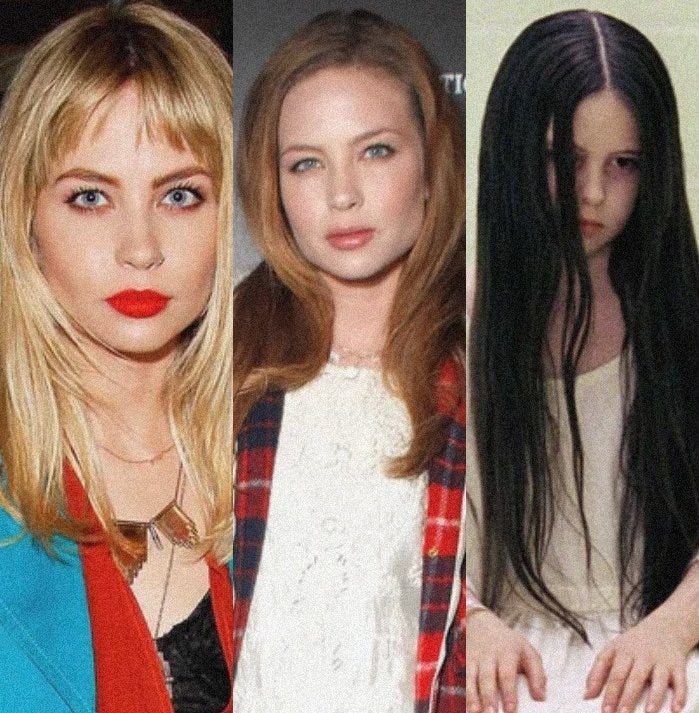
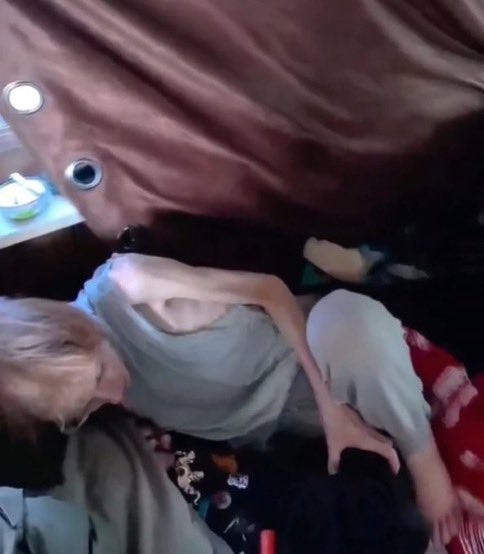
If you were a kid in 2002, you knew her face. She voiced Lilo in Lilo & Stitch, Chihiro in the English dub of Spirited Away and she played Samara Morgan in The Ring. Daveigh Chase won an MTV Movie Award for Best Villain for her performance in the English Adaptation of Ringu. She was everywhere for about four years, and then, suddenly, she wasn’t. She stopped acting by 2016, and by 2019, her mother had lost contact with her entirely. In December 2025, six months before her death, her mother saw what she believed was a video of Daveigh on Reddit. She was severely emaciated, slumped over, trying to push the camera away.
[VIDEO]
Daveigh Chase started in commercials at age three. Her mother, a former nurse, relocated from Oregon to Los Angeles for her daughter’s career. By twelve, she had voiced two of the most iconic animated characters of the early 2000s and starred in one of the decade’s defining horror films. She had also won an Annie Award and an MTV Movie Award before she was old enough to drive.
An interesting moment worth noting is that, at the 2003 MTV Movie Awards, Shaun “P Diddy” Combs presented Daveigh, then 12, with the Best Villain award alongside Ashton Kutcher. On camera, backstage, he asked her if she was “coming to the afterparty tonight.” She nodded yes. Combs laughed and yelled “Yeah!”
[VIDEO]
Whether she actually attended is unknown.
By the time the clip resurfaced, Combs had already been arrested on federal sex trafficking and racketeering charges. Attorney Tony Buzbee was representing 120 accusers, 25 of whom were minors at the time of the alleged incidents. The youngest was nine years old, allegedly approached at a Bad Boy Records audition. Buzbee described a consistent pattern: luring young people pursuing entertainment careers with promises of stardom, then taking them somewhere private. Combs was ultimately convicted on two prostitution-related charges and sentenced to just over four years, though he was acquitted on the trafficking and racketeering counts.
If you were a kid in 2002, you knew her face. She voiced Lilo in Lilo & Stitch, Chihiro in the English dub of Spirited Away and she played Samara Morgan in The Ring. Daveigh Chase won an MTV Movie Award for Best Villain for her performance in the English Adaptation of Ringu. She was everywhere for about four years, and then, suddenly, she wasn’t. She stopped acting by 2016, and by 2019, her mother had lost contact with her entirely. In December 2025, six months before her death, her mother saw what she believed was a video of Daveigh on Reddit. She was severely emaciated, slumped over, trying to push the camera away.
[VIDEO]
Daveigh Chase started in commercials at age three. Her mother, a former nurse, relocated from Oregon to Los Angeles for her daughter’s career. By twelve, she had voiced two of the most iconic animated characters of the early 2000s and starred in one of the decade’s defining horror films. She had also won an Annie Award and an MTV Movie Award before she was old enough to drive.
An interesting moment worth noting is that, at the 2003 MTV Movie Awards, Shaun “P Diddy” Combs presented Daveigh, then 12, with the Best Villain award alongside Ashton Kutcher. On camera, backstage, he asked her if she was “coming to the afterparty tonight.” She nodded yes. Combs laughed and yelled “Yeah!”
[VIDEO]
Whether she actually attended is unknown.
By the time the clip resurfaced, Combs had already been arrested on federal sex trafficking and racketeering charges. Attorney Tony Buzbee was representing 120 accusers, 25 of whom were minors at the time of the alleged incidents. The youngest was nine years old, allegedly approached at a Bad Boy Records audition. Buzbee described a consistent pattern: luring young people pursuing entertainment careers with promises of stardom, then taking them somewhere private. Combs was ultimately convicted on two prostitution-related charges and sentenced to just over four years, though he was acquitted on the trafficking and racketeering counts.
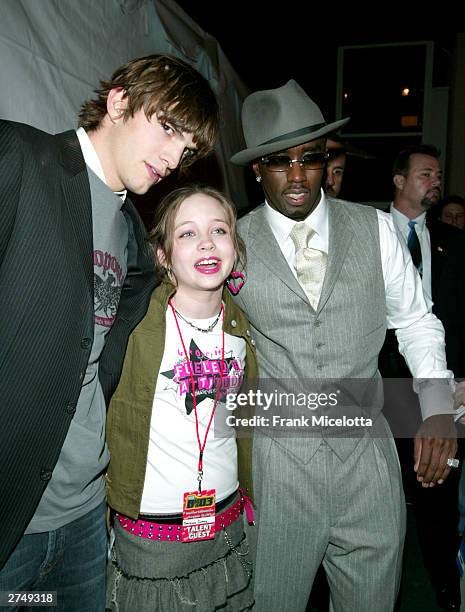
None of that connects Daveigh to anything specific. The clip is what it is: a 33-year-old man, at an industry event, asking a twelve-year-old girl to come to his party. In 2003, it aired without comment.
Chronology of Use
So far, two versions of Daveigh’s addiction origin exist in the public record.
Her father, John David Schwallier, told the New York Times that she had been struggling with drug addiction since age 13, around 2003. He said he became estranged from her around the time she turned nineteen in 2009, and that she became distanced from her mother around the same time. His account implies a long, continuous addiction history.
Daveigh’s mother, Cathy, tells a different story. In her account, the downward spiral began after a 2016 motorcycle accident, when doctors prescribed oxycodone for a back injury. The addiction, by her telling, was iatrogenic: a medical intervention that opened a door Daveigh couldn’t close. “She was seeking drugs and was partying with the wrong people,” Cathy told the Daily Mail. “I never kicked my daughter out. She wanted freedom and these people got her hooked on some drugs. That was the beginning.”
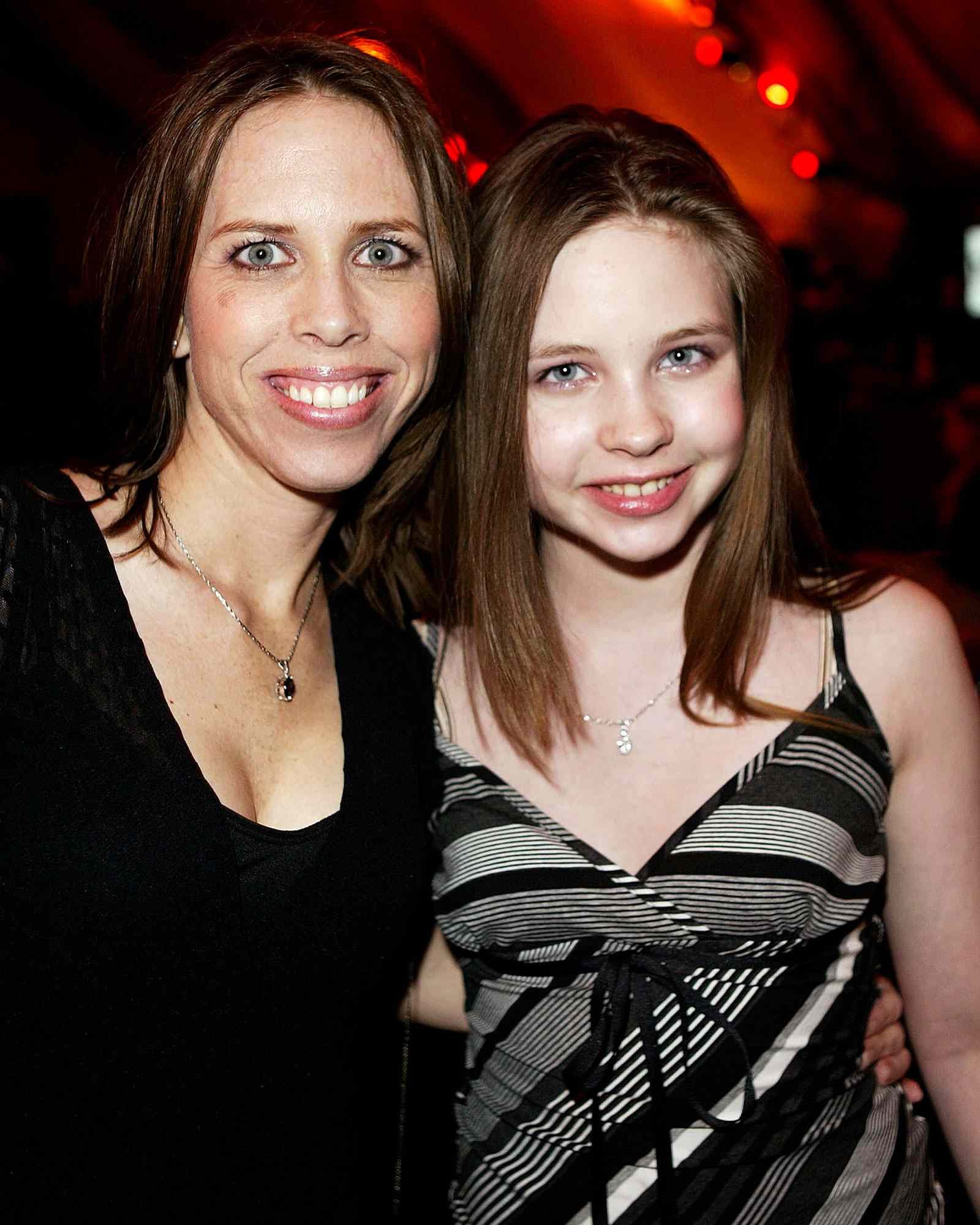
Daveigh’s mother spent years watching her daughter collapse at a distance, with countless nights scrolling through Reddit, Google, and the Los Angeles County Medical Examiner’s website, searching for any trace of her. She was checking the coroner’s unidentified bodies list, hoping Daveigh wouldn’t appear.
These accounts don’t just differ in degree — they locate the problem in completely different periods of Daveigh’s life and assign it completely different causes. One version has addiction running through the height of her career. The other has her career ending more or less cleanly, with a pharmaceutical trigger arriving years later.
Daveigh may have been on prescription stimulants (Adderall being the obvious candidate for a working child actor navigating a demanding schedule, as seen with Amanda Bynes) that her mother categorized separately from “drugs,” while her father counted everything together. At minimum, that’s the most generous explanation for the discrepancy that doesn’t require either parent to be lying. It also fits a pattern that recurs throughout child star history: legal prescriptions serving as the on-ramp, the line between “medication” and “addiction” blurring slowly enough that no one notices until it’s too late.
Neither version is definitively sourced. Both come from grieving, estranged parents who had limited contact with their daughter for years. What they agree on matters more anyway: by the time anyone tried to intervene, there was nothing left to grab onto.
Business as Usual
The Hollywood child-actor pipeline is designed around output, and children who move through it fastest are the ones with parents who subordinate everything else to the industry’s demands. This is something that Melissa Gilbert, who worked briefly with Daveigh, observed publicly after her death. “When a parent or parents lose sight of who they are, of what their true responsibility is, and their lives revolve solely around their little star child,” Gilbert wrote on Instagram, “that’s where the trouble begins.” Gilbert was careful not to name names.
It goes without saying that a child star is famous before they have any framework for understanding what “fame” is. In some cases, their income supports the family, and their performance schedule shapes the household calendar. They are told they are talented, special, and all of that is contingent on continued performance. When the roles dry up, as they inevitably do, the identity scaffolding collapses with them.
For Daveigh, the roles started drying up around 2012. She made her last film credit in 2016. According to her former manager John Ryan, she had been “sober a while” before they lost contact in late 2015. Ryan had been developing a documentary about her disappearance from Hollywood before her death.
In the days following Daveigh’s death, a man named Roy Hernandez identified himself to TMZ as her boyfriend. He launched a GoFundMe to cover cremation expenses, writing that after “a difficult childhood and a painful falling out with her family, Daveigh was bullied and struggled to find safety and happiness in downtown L.A.” He framed their relationship as protective: “When we met, I promised to protect her and give her the love and comfort she deserved.”
Her former manager John Ryan responded directly, urging fans not to donate. “That GoFundMe is not going toward ANY expenses for Daveigh,” Ryan told Deadline. He stated that Hernandez “brought her into the hospital in terrible condition and didn’t let any of the family know until she passed so he can control the dialogue,” and characterized the fundraiser as an attempt to “make it look like a Romeo and Juliet situation to benefit his own pockets.” Ryan noted there were no medical or funeral expenses to cover.
Hernandez had initially told TMZ that Chase died of meningitis and sepsis. The coroner’s office later determined the cause was AIDS.
The cause of death is worth sitting with, because it tells you something specific about the conditions Daveigh was living in. HIV transmission via shared needles is possible but statistically less likely than other bloodborne infections. Hepatitis B and C transmit far more efficiently through the same route. The baseline risk per needle-sharing exposure is roughly 0.3 percent, though that rises to around 5 percent with a high-viral-load source. Reaching an AIDS diagnosis (late-stage HIV, CD4 count below 200) requires years of untreated infection. It means no access to antiretroviral treatment, no consistent healthcare, no one who could intervene at any earlier point in the disease’s progression.
The entertainment industry generates enormous cultural meaning through the labor of children, and then, when those children are no longer commercially viable, it generates no infrastructure for what comes next. There is no off-ramp, but instead an assumption, that normal adolescence and early adulthood can proceed in parallel with an all-consuming, Hollywood career.
The people who knew Daveigh describe someone who was talented, warm, and funny, and who found herself increasingly surrounded by people with no interest in her wellbeing. “She was surrounding herself with the worst of the worst people,” said a musician who had been close to her between 2018 and 2023. “It’s such a tragedy because no one cared for her best interests at all.” He got clean in 2023 and hadn’t seen her since. The industry that made her famous at twelve did not consider itself responsible for what happened at thirty-five. The credits rolled, the contracts ended, and the rest became someone else’s problem.
Sources
Sources
- Daveigh Chase Cause of Death Revealed https://www.yahoo.com/entertainment/celebrity/articles/daveigh-chase-cause-death-revealed-205556473.html
- Melissa Gilbert on Daveigh Chase https://www.tvinsider.com/1273559/melissa-gilbert-daveigh-chase-death/
- Variety archive https://archive.ph/rjAb7
- Daily Mail archive https://archive.md/ABxjM
- Deadline archive https://archive.md/6VRWd
- TMZ archive https://archive.md/ScKUX
- Spencer Pratt cpmments, and Parent Accounts https://www.yahoo.com/entertainment/celebrity/articles/spencer-pratt-daveigh-chase-died-172401025.html
- HIV needle-sharing risk study https://pmc.ncbi.nlm.nih.gov/articles/PMC8544719/